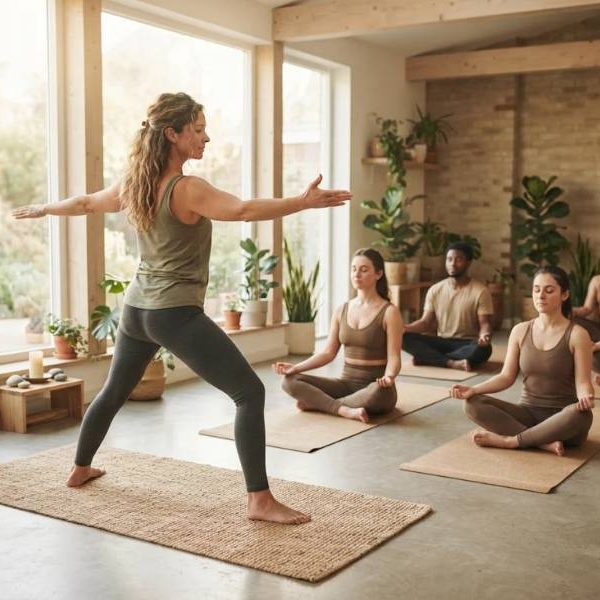
Yoga and meditation have been practiced for centuries, and today millions of people use them to relax and move better. You do not need special equipment, flexibility or a free afternoon. A few minutes each day can make mornings smoother and evenings softer. This guide gives beginners a practical start.
Begin with a small goal
Choose five or ten minutes rather than an hour. A short practice is easier to repeat, and repetition builds the habit.
Consistency matters more than duration, especially in the first weeks.
Find a quiet corner
You need only a flat floor and enough room to stretch your arms. A mat helps with grip, but a folded blanket also works.
Silence your phone and tell people at home that you need a short break.
Wear comfortable clothes
Choose clothing that lets you move freely without pulling or slipping. Practice barefoot to feel stable on the floor.
Avoid eating a heavy meal in the hour before you start.
Start with breathing
Sit comfortably and breathe slowly through the nose. Count to four while inhaling and to six while exhaling.
Even two minutes of slow breathing can calm the mind.
Simple poses to learn first
Mountain pose, cat and cow, child pose and downward dog are common starting points. They teach alignment, spinal movement and rest.
Hold each for a few breaths and move without hurry.
Listen to your body
Stretching should feel like gentle tension, never sharp pain. If something hurts, ease out of the pose.
Every body is different, and comparison with others is not useful.
Use props
Blocks, straps and cushions make poses more accessible. They are tools, not signs of weakness.
A rolled towel can serve as a bolster.
Learn the basics of posture
Standing and sitting tall with relaxed shoulders improves comfort during the whole day. Practice noticing your posture at the desk.
Small corrections add up.
Official health information
Research on yoga and its safety is summarized by public health agencies. The NCCIH guide to yoga explains what is known about benefits and risks.
People with medical conditions should speak with a doctor before starting.
Try seated meditation
Sit upright, close your eyes and rest attention on your breath. When thoughts arise, notice them and return to the breath.
Wandering is normal and part of the practice, not a failure.
Use guided sessions
Audio guides can help you stay focused when you are new. Choose a calm voice and a short length.
Gradually try silent practice as you gain confidence.
Body scan for relaxation
Lie down and move your attention slowly from head to toes, softening each area. This is useful before sleep.
It takes about ten minutes.
Sanskrit and the roots of yoga
Many pose names come from Sanskrit and relate to Indian traditions. Learning their meaning adds depth to practice.
Teachers and publishers working in this field often use Hindi translation services to prepare accurate books, class materials and websites.
Classes and teachers
A good teacher explains alignment and offers options for every level. Group classes also give motivation.
If you attend international retreats, clear language support helps. Our article on interpreter vs translator explains how spoken and written help differ.
Build a morning ritual
Stretch for a few minutes after waking, drink water and take five slow breaths. It sets a calm tone for the day.
Place your mat where you can see it.
Build an evening ritual
Gentle forward folds and slow breathing help the body switch off. Dim the lights and put screens away.
Many people sleep more easily after a short evening practice.
Use yoga at work
Neck rolls, shoulder shrugs and seated twists can be done at a desk. Stand up and move every hour.
Brief breaks improve focus and reduce stiffness.
Handle stress in the moment
When you feel tense, pause and take three slow breaths, feeling your feet on the floor. This simple reset takes under a minute.
Practice it daily so it is ready when you need it.
Track your progress
Note how you feel before and after sessions, not just how many minutes you did. Mood, sleep and energy are good indicators.
Celebrate small improvements.
Avoid common mistakes
Pushing too hard, skipping warm up and forcing flexibility cause injuries. Comparing yourself to social media images is also unhelpful.
Patience is part of the practice.
Stay safe
Pregnant people, people with injuries and those with chronic conditions should get professional advice. Modify or skip poses that feel wrong.
Safety always comes before depth.
Keep it enjoyable
If a practice becomes a chore, change it. Try a new style, music or location.
Enjoyment keeps habits alive.
A gentle ending
Yoga and meditation do not require perfection. A few mindful minutes each day can make life feel calmer and more balanced.
Start today and let the habit grow at its own pace.
Create a calm space at home
A plant, soft light and a cushion can make your practice corner inviting. Keep it clean and free of clutter, so sitting down feels easy.